Retirement
State pension age (AOW age) in the Netherlands: when do you get AOW?
Written for readers in the Netherlands
The Dutch state pension (AOW) age is 67 up to and including 2027, then 67 and 3 months for now. Why it moves, and why it's only fixed five years ahead.

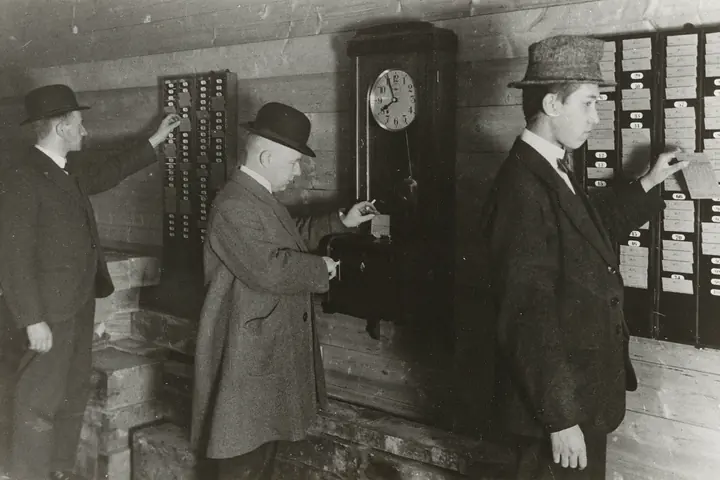
Photo: Ary Groeneveld (Stadsarchief Rotterdam) / Wikimedia Commons (opens in a new tab), CC0 (opens in a new tab)
You look up when your state pension (AOW) starts in the Netherlands, you remember the date, and a few years later you check again. Now it says something else.
Your own date is in our AOW Age Calculator, and the table lists the age by date of birth. The feeling that the date keeps moving is only half right.
How the AOW age went up from 65
For over half a century the rule was simple: you turned 65 and you got AOW. Meanwhile, pensioners were living five years longer than when the scheme began in the 1950s, the government wrote in a 2014 bill: people live longer, so they get AOW for longer.
In 2013 the increase began, at one month a year. After that, the law changed pace a few times.
First it had to go faster, reaching 67 as early as 2021. Later a new law slowed things down, partly because some people felt caught out by the increase. If you looked up your date during those years, you really did see something different.
How the AOW age is set
These days a formula in the law sets the age. Every autumn, Statistics Netherlands (CBS) (opens in a new tab) estimates how long 65-year-olds will live on average in the year in question, and from that the Minister of Social Affairs and Employment works out the AOW age. Living a year longer eventually means AOW 8 months later and 4 months more of it.
Those 8 months don't come all at once. Each year the age stays the same or 3 months are added, and it doesn't go down.
That produces sharp cut-offs. If you were born on the last day of 1960, you get AOW on your 67th birthday.
If you were born one day later, it's 1 April 2028. So nobody reaches the AOW age in the first three months of that year.
Example: born on 1 January 1961
Your AOW date
1 April 2028
Date of birth 1 January 1961
AOW age
67 years and 3 months
Your AOW age by date of birth
| Born | AOW age | You get AOW in |
|---|---|---|
| in 1958 | 67 | 2025 |
| in 1959 | 67 | 2026 |
| in 1960 | 67 | 2027 |
| 1 January to 30 September 1961 | 67 and 3 months | 2028 |
| 1 October 1961 to 30 September 1962 | 67 and 3 months | 2029 |
| 1 October 1962 to 30 September 1963 | 67 and 3 months | 2030 |
| 1 October 1963 to 30 September 1964 | 67 and 3 months | 2031 |
| 1 October 1964 to 30 September 1965 | 67 and 3 months | 2032 |
| on or after 1 October 1965 | not fixed yet | 2033 or later |
At 67 and 3 months, you get AOW 3 months after your 67th birthday.
The middle column shows that things aren't moving so fast any more. The first six years the formula fixed produced one step. The pandemic played a part. Because of excess deaths, CBS put life expectancy lower for years, the minister wrote in November 2025 (in Dutch) (opens in a new tab). On the 2023 figures that one step wouldn't have come either, according to the minister. It stayed, because what's fixed stays fixed unless the law changes.
It can still seem to move because of the years that aren't fixed yet. For those, the Social Insurance Bank (SVB) shows an expected age (in Dutch) (opens in a new tab), based on a CBS estimate that's redone every year. If it comes out higher, your expected age moves with it, without anyone having decided anything. Our calculator uses the age that's fixed now, so it shows the earliest possible date. The SVB's expected date can be later.
Why it's only fixed five years ahead
For the Dutch government, five years is enough. The age has to be fixed that far ahead so that people know where they stand (in Dutch) (opens in a new tab), and each year one more year is added. At 62, you know where you stand. At 50, you only know it won't be any lower.
In 2012 the Labour Party (PvdA) asked in parliament why it was five years and not, say, ten. A 2011 bill had still assumed at least eleven years, with steps of a whole year. The government replied (in Dutch) (opens in a new tab) that five years was enough to adapt to a rise of three months.
Looking further ahead is also less certain, in our view. With eleven years' notice, today's decision would be about 2038. In its 2024 forecast (opens in a new tab), CBS gives a margin of 2.4 years for that year, against 1.8 years for 2032. There's a 67% chance the outcome falls inside it.
The plan for 2033 and the decision on 2032
In 2026 it looked as if the rule itself would change. Under the coalition agreement (opens in a new tab) of January, living a year longer would once again mean AOW a whole year later from 2033. In May the government dropped the plan. What comes of its talks with trade unions and employers about social security isn't known yet.
The decision on 2032 is in: the AOW age stays at 67 and 3 months, the minister wrote on 13 November 2026 (in Dutch) (opens in a new tab). This applies if you were born between 1 October 1964 and 30 September 1965. CBS (opens in a new tab) came to 21.08 years, below the 21.39 years that, by our own calculation, a step needed.
If you were born later, your age isn't fixed yet; the age for 2033 has to be fixed by 1 January 2028. With a date of birth of 1 July 1965 you get AOW on 1 October 2032, and that date is now fixed.
Example: born on 1 July 1965
Your AOW date
1 October 2032
Date of birth 1 July 1965
AOW age
67 years and 3 months
Applying for AOW and when it's paid
You don't need to do anything yet. About 4 months before your AOW age, the SVB sends you a letter (opens in a new tab). You then apply yourself, online with DigiD (the Dutch government login) or on paper. If you've heard nothing 3 months before, contact the SVB yourself. Outside the Netherlands you apply yourself (opens in a new tab), 6 months before.
The SVB (opens in a new tab) (in Dutch) pays AOW every month, around the 23rd, including the month your AOW starts.
A pension through your employer can start earlier or later than your AOW. You arrange that with your pension fund.
AOW if you moved to the Netherlands later in life
It's the amount that changes, not the age. You build up AOW (opens in a new tab) in the 50 years before your AOW age, 2% of a full AOW per insured year. You're usually insured if you live or work here. Each year without insurance means 2% less. It also matters whether you live alone.
Under certain conditions you can fill gaps (opens in a new tab), if you apply within 10 years of first coming here to live or work.
Consulted on 5 November 2026, the sources on 2032 on 13 November 2026.
- What is my AOW state pension age? | Netherlands Worldwide (opens in a new tab)
- What is the AOW pension? | Netherlands Worldwide (opens in a new tab)
- Forecast life expectancy for 65-year-olds in 2031 is 21 years (7 November 2025) | CBS (opens in a new tab)
- Forecast life expectancy for 65-year-olds is 21 in 2032 (13 November 2026) | CBS (opens in a new tab)
- Applying for an old-age pension | Government.nl (opens in a new tab)
- Voluntarily filling any gaps in state pension (AOW) qualifying years | Government.nl (opens in a new tab)
- The Netherlands at work, coalition agreement 2026-2030 | Government.nl (opens in a new tab)
- AOW-leeftijd (in Dutch) | Sociale Verzekeringsbank (SVB) (opens in a new tab)
- Betaling AOW (in Dutch) | Sociale Verzekeringsbank (SVB) (opens in a new tab)
- AOW-leeftijd stijgt niet in 2032 (13 November 2026, in Dutch) | Rijksoverheid (opens in a new tab)
- Kamerbrief over vaststelling AOW-gerechtigde leeftijd 2032 (13 November 2026, in Dutch) | open.overheid.nl (opens in a new tab)
- AOW-leeftijd 2026-2032 (in Dutch) | Rijksoverheid (opens in a new tab)
- Algemene Ouderdomswet, articles 7a and 16 (text in force from 1 July 2026, in Dutch) | wetten.overheid.nl (opens in a new tab)
- Hoe vraag ik mijn AOW-uitkering aan? (in Dutch) | Rijksoverheid (opens in a new tab)
- Met pensioen: maak een overzicht van wat u moet weten en regelen (in Dutch) | Rijksoverheid (opens in a new tab)
- 1957: Algemene Ouderdoms Wet (AOW), social security timeline (in Dutch) | CBS (opens in a new tab)
- Vaststelling AOW-gerechtigde leeftijd, aanvangsleeftijd 2031 en pensioenrichtleeftijd 2027 (Kamerstuk 32 163, nr. 62, 7 November 2025, in Dutch) | Officiële bekendmakingen (opens in a new tab)
- Vaststelling AOW-leeftijd 2030 en pensioenrichtleeftijd 2026 (Kamerstuk 32 163, nr. 61, 8 November 2024, in Dutch) | Officiële bekendmakingen (opens in a new tab)
- Vaststelling AOW-leeftijd 2029 (Kamerstuk 32 163, nr. 59, 10 November 2023, in Dutch) | Officiële bekendmakingen (opens in a new tab)
- Mededeling over de pensioengerechtigde leeftijd en de aanvangsleeftijd in 2031 (Stcrt. 2025, 38647, in Dutch) | Staatscourant (opens in a new tab)
- Wet verhoging pensioenleeftijd, extra verhoging AOW en flexibilisering ingangsdatum AOW, explanatory notes (Kamerstuk 33 046, nr. 3, 17 October 2011, in Dutch) | Officiële bekendmakingen (opens in a new tab)
- Wet verhoging AOW- en pensioenrichtleeftijd, explanatory notes (Kamerstuk 33 290, nr. 3, 11 June 2012, in Dutch) | Officiële bekendmakingen (opens in a new tab)
- Wet verhoging AOW- en pensioenrichtleeftijd, committee report (Kamerstuk 33 290, nr. 7, 13 June 2012, in Dutch) | Officiële bekendmakingen (opens in a new tab)
- Wet verhoging AOW- en pensioenrichtleeftijd, government reply (Kamerstuk 33 290, nr. 9, 15 June 2012, in Dutch) | Officiële bekendmakingen (opens in a new tab)
- Versnelling stapsgewijze verhoging AOW-leeftijd, explanatory notes (Kamerstuk 34 083, nr. 3, 18 November 2014, in Dutch) | Officiële bekendmakingen (opens in a new tab)
- Wet temporisering verhoging AOW-leeftijd, explanatory notes (Kamerstuk 35 223, nr. 3, 17 June 2019, in Dutch) | Officiële bekendmakingen (opens in a new tab)
- Wet temporisering verhoging AOW-leeftijd (Stb. 2019, 246, in Dutch) | Staatsblad (opens in a new tab)
- Wet verandering koppeling AOW-leeftijd, explanatory notes (Kamerstuk 35 520, nr. 3, 8 July 2020, in Dutch) | Officiële bekendmakingen (opens in a new tab)
- Wet verandering koppeling AOW-leeftijd, government reply (Kamerstuk 35 520, nr. 6, 12 October 2020, in Dutch) | Officiële bekendmakingen (opens in a new tab)
- Wet verandering koppeling AOW-leeftijd (Stb. 2020, 503, in Dutch) | Staatsblad (opens in a new tab)
- Aan de slag. Coalitieakkoord 2026-2030 van D66, VVD en CDA (30 January 2026, in Dutch) | Tweede Kamer (opens in a new tab)
- Kabinet wil open gesprek met vakbonden en werkgevers over gezamenlijk pact (26 May 2026, in Dutch) | Rijksoverheid (opens in a new tab)
- Prinsjesdag 2026: maatregelen op het gebied van SZW (15 September 2026, in Dutch) | Rijksoverheid (opens in a new tab)