Energy
Solar panels in the Netherlands: net metering ends in 2027
Written for readers in the Netherlands
The Dutch net metering scheme (salderingsregeling) ends on 1 January 2027. What it costs you each year, and how to get more out of your solar panels.

Photo: Daria Nepriakhina / Unsplash (opens in a new tab), Unsplash License (opens in a new tab)
Once a year, your Dutch energy supplier sends you an annual statement (jaarafrekening). If you have solar panels, part of it quietly works in your favour. What your panels feed back to the grid on sunny afternoons is deducted from what you use on dark evenings. That's net metering (salderen), and the scheme behind it, the salderingsregeling, is ending. Your panels will keep making electricity, but what you don't use yourself will soon be worth much less. How much that costs you depends mostly on when you use electricity.
What changes on 1 January 2027
Until the end of 2026, nothing changes. After that, you pay the full price for all the electricity you take from the grid, including energy tax (energiebelasting) and VAT (btw). For what you feed back, you get feed-in compensation (terugleververgoeding). If your billing year runs past New Year, your supplier has to split it at 1 January 2027.
That compensation is small, because your supplier charges feed-in costs (terugleverkosten) for handling your electricity. On a fixed or variable contract, you're left with around 1.25 cents (opens in a new tab) per kilowatt hour (kWh). For electricity you buy, the independent advice centre Kenniscentrum Duurzaam Leven uses an average of 21 cents for 2027 to 2040, the expectation of the Netherlands Environmental Assessment Agency (PBL). So what you feed back in the afternoon, you buy back in the evening for far more.
What it costs you each year
Without changing anything, an average household uses around 30% of its solar power as it's being made. The rest is fed back to the grid.
Your annual statement shows how much you fed back, listed as teruglevering. If you use more electricity than you feed back, every 1,000 kWh of it will cost you almost €200 a year once net metering ends.
Our example is a set of ten panels that produce 3,800 kWh a year. With net metering, and at the price the Kenniscentrum expects, they would save you €798 in the first year.
Without net metering, only €272.65 remains. That's just over €525 a year less. You keep about a third of the saving.
Example: ten panels without net metering
Paid back after
14 years and 5 months
Cost of the installation €3,800 · Used yourself (%) 30 · Feed-in compensation per kWh €0.0125
Saving in the first year
€272.65
Saving over the lifespan
€6,423
Net result
€2,623
Return in the first year
7.2 %
In this example, new panels take 14 years and 5 months to pay for themselves. Panels bought before 2020 have usually paid for themselves already. And even without net metering, solar panels earn back their cost well within their average lifespan (opens in a new tab).
Using more of your own electricity
Electricity you use while your panels are making it is electricity you don't buy, and you pay no tax on it. From 2027, that's the electricity that earns you the most.
The simplest step is to run the washing machine, dishwasher and tumble dryer one after another while the sun is out. That gets you to about 35%, and your first-year saving in the example goes up by about €38. Our electricity cost calculator shows what each appliance uses.
Charging an electric car on solar power gets you to about half. Your first-year saving in the example then rises from €272.65 to about €420.
Your contract and the feed-in costs
A contract with a fixed end date after 1 January 2027 may still give you net metering. Your supplier must inform you properly (opens in a new tab) about what the new rules mean for your contract. Check the terms.
Your feed-in compensation is in your contract. Feed-in costs differ between suppliers, and from 2027 your bill shows them per kWh you fed back. Sometimes they're higher than the compensation, and then feeding electricity back costs you money.
Put the compensation and the feed-in costs side by side before you switch supplier or renew your contract.
A home battery
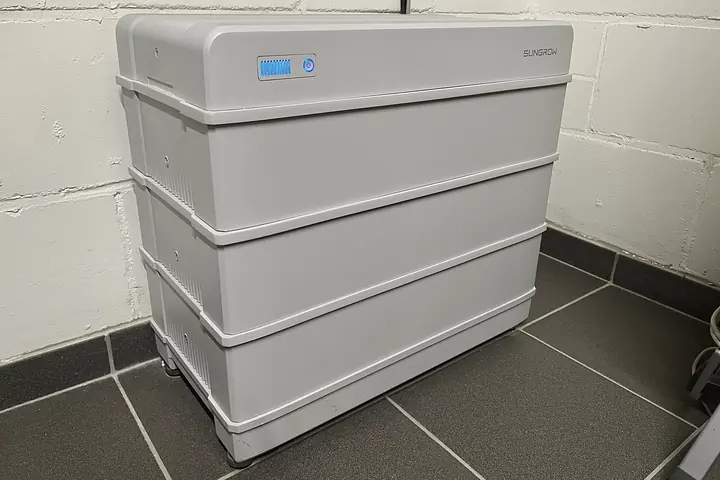
Storing your solar power for the evening sounds like the answer. But a home battery (thuisbatterij) easily costs a few thousand euros, and there's no national subsidy for it. With the savings on your bill, it most likely won't pay for itself (opens in a new tab).
Working it out for your own panels
In the solar panel payback calculator, you enter what your panels cost, what they produce and how much you use yourself. As the feed-in compensation, enter what's left per kWh after the feed-in costs, even if that's a negative amount. If your contract charges a fixed amount, divide it by the kWh you feed back first.
Consulted on 8 November 2026.
- Netting scheme for solar panels ends per 2027 | Business.gov.nl (opens in a new tab)
- ACM's Monitor on the consumer energy market: suppliers must inform customers properly about important changes in 2027 (17 October 2025) | ACM (opens in a new tab)
- Salderingsregeling stopt in 2027 (in Dutch) | Rijksoverheid (opens in a new tab)
- Salderen en terugleveren (in Dutch) | ACM ConsuWijzer, Netherlands Authority for Consumers and Markets (opens in a new tab)
- Zonnestroom zonder saldering: dit moet je weten (last changed 30 October 2026, in Dutch) | Kenniscentrum Duurzaam Leven, formerly Milieu Centraal (opens in a new tab)
- Kosten en opbrengst zonnepanelen (last changed 5 November 2026, in Dutch) | Kenniscentrum Duurzaam Leven (opens in a new tab)
- Besparingen: met welke energieprijzen rekenen we? (last changed 24 June 2026, in Dutch) | Kenniscentrum Duurzaam Leven (opens in a new tab)
- Thuisbatterij: zonne-energie opslaan (last changed 9 November 2026, in Dutch) | Kenniscentrum Duurzaam Leven (opens in a new tab)
- Regeling presenteren en factureren terugleverkosten, in force from 1 January 2027 (Stcrt. 2026, 28208, in Dutch) | Staatscourant (opens in a new tab)